Integrity One

Your Complete Financial Solution

  • Home
  • News
  • Services
    • Financial Planning Services
    • Aged Care
    • Finance & Mortgage
    • Centrelink & DVA
    • Accounting & Taxation
    • Business Advisory Services
    • Planning for Success
    • Gen X,Y & Z
  • Small Business Portal
  • About Us
    • Our Team
    • Financial Services Guide
  • Contact Us

Spouse super contributions

January 3, 2026

Ways of contributing to your spouse’s super

There are 2 ways of contributing to your spouse’s super:

  • You may be able to split contributions you have already made to your own super, by rolling them over to your spouse’s super – known as a contributions-splitting super benefit.
  • You can make a super contribution directly to your spouse’s super, treated as their non-concessional contribution, which may entitle you to a tax offset.

Splitting your contributions with your spouse

Some super funds allow you to split your contributions with your spouse.

When and how to apply

You can generally apply to split your contributions with your spouse after the end of the income year in which your contributions were made.

You apply to your fund to split your employer contributions and personal concessional contributions made during the previous income year, using the Superannuation contributions splitting application (NAT 15237) or similar form provided by your fund. The fund has the discretion to allow or not allow the request.

There are restrictions on the type and amount of contributions you can split.

If you’re planning to split any part of your contributions with your spouse but you also want to claim a tax deduction for them, you must give your fund the notice of intent to claim a deduction before applying to split the contributions.

How split contributions are treated and reported

A contribution split with your spouse is called a ‘contributions-splitting super benefit’ and is treated as a rollover to your spouse, not a new contribution for them.

Accordingly, splitting your contributions with your spouse does not reduce the total contributions made for you or change their characteristics for the purposes of your contributions caps. For example, if you make a personal contribution and claim a tax deduction for it, that will count towards your concessional contributions cap for the year even if you then split and roll it over to your spouse. It will not count towards your spouse’s cap.

Tax offset for super contributions on behalf of your spouse

You may be able to claim a tax offset of up to $540 per year if you make a super contribution on behalf of your spouse (married or de facto) if their income is below $40,000.

Contributions you make to your spouse’s super are treated as their non-concessional contributions, whether or not you’re eligible for the super tax offset.

General eligibility conditions

To be eligible:

  • the contribution must be made to either a complying super fund or an approved retirement savings account (RSA)
  • both you and your spouse must be Australian residents when the contribution is made
  • the contribution is not deductible by you
  • you and your spouse must not be living separately and apart on a permanent basis when making the contribution.

Specific eligibility conditions

You’re eligible for a tax offset for a contribution made on behalf of your spouse if:

  • their income is less than $40,000 in the income year in which the contribution is made, calculated as the sum of their:
    • assessable income (disregarding any amount released to your spouse under the first home super saver scheme)
    • total reportable fringe benefits amounts
    • total reportable employer super contributions
  • your spouse did not exceed their non-concessional contributions cap in the income year in which the contribution is made
  • your spouse had a total super balance less than the general transfer balance cap immediately before the start of the income year in which the contribution is made
  • for the 2020–21 and later income years, your spouse was under 75 years old when the contributions are made
  • for income years before 2020–21, your spouse was under 70 years old when the contributions were made.

Offset amount

The tax offset amount reduces when your spouse’s income is greater than $37,000 and completely phases out when your spouse’s income reaches $40,000. The tax offset is calculated as 18% of the lesser of:

  • $3,000 minus the amount by which your spouse’s income exceeds $37,000
  • the sum of your spouse contributions in the income year.

The tax offset for eligible spouse contributions can’t be claimed for super contributions that you made to your own fund, then split to your spouse. That is a rollover or transfer, not a contribution.

Example: eligibility for the tax offset for super contributions on behalf of your spouse

Robert and Judy are spouses. Robert earns $19,000 in 2018–19 and Judy makes a $3,500 contribution to Robert’s super fund.

Robert and Judy meet the eligibility requirements to claim a tax offset. Judy can claim a tax offset in her 2018–19 tax return for the contributions she makes to Robert’s super fund.

The tax offset is calculated as 18% of the lesser of:

  • $3,000 minus the amount over $37,000 that Robert earned (in this case, nil)
  • the value of the spouse contributions (in this case, $3,500).

Judy can claim a tax offset of $540, being 18% of $3,000.

Example: eligibility for a part tax offset for super contributions on behalf of your spouse

Carmel and Adam are married and living together. Carmel is 46 years old and her income is $38,000 per year. Carmel has not exceeded her non-concessional contributions cap for the income year, and her total super balance is under $1.6 million.

Adam wishes to make a super contribution of $3,000, on Carmel’s behalf, to her complying super fund.

Carmel’s income is under the threshold. Adam is eligible for a tax offset. As Carmel earns more than $37,000 per year, Adam will not receive the maximum tax offset of $540. Instead, his entitlement is 18% of the lesser of:

  • $3,000 reduced by every dollar over $37,000 that Carmel earns
  • the value of spouse contributions.

Carmel earns $1,000 over the $37,000 income threshold. Adam’s tax offset is $360. This is calculated as 18% of $2,000 ($3,000 reduced by the $1,000 that Carmel earned over the $37,000 income threshold).

If you have any questions regarding this article, contact us today.

Source: ato.gov.au
Reproduced with the permission of the Australian Tax Office. This article was originally published onhttps://www.ato.gov.au/individuals-and-families/super-for-individuals-and-families/super/growing-and-keeping-track-of-your-super/how-to-save-more-in-your-super/spouse-super-contributions
Important:
This provides general information and hasn’t taken your circumstances into account.  It’s important to consider your particular circumstances before deciding what’s right for you. Although the information is from sources considered reliable, we do not guarantee that it is accurate or complete. You should not rely upon it and should seek qualified advice before making any investment decision. Except where liability under any statute cannot be excluded, we do not accept any liability (whether under contract, tort or otherwise) for any resulting loss or damage of the reader or any other person.
Any information provided by the author detailed above is separate and external to our business and our Licensee. Neither our business nor our Licensee takes any responsibility for any action or any service provided by the author. Any links have been provided with permission for information purposes only and will take you to external websites, which are not connected to our company in any way. Note: Our company does not endorse and is not responsible for the accuracy of the contents/information contained within the linked site(s) accessible from this page.

Suite 2, 1 Railway Crescent
Croydon, Victoria 3136

Email: integrityone@iplan.com.au

Telephone : 03 9723 0522

Integrity One Facebook

This information is of a general nature and does not take into consideration anyone’s individual circumstances or objectives. Financial Planning activities only are provided by Integrity One Wealth Advisers Pty Ltd (ABN 35 994 727 125) as a Corporate Authorised Representative (1316489) of Integrity Financial Planners Pty Ltd (AFSL 225051). Integrity One Wealth Advisers Pty Ltd and Integrity One Accounting and Business Advisory Services Pty Ltd are not liable for any financial loss resulting from decisions made based on this information. Please consult your adviser, finance specialist, broker, and/or accountant before making decisions using this information.

Filed Under: Blogs, News Tagged With: FP

How much super should I have?

January 3, 2026

How much super should I have is a common question. But when it comes to how much super (or other savings) you’ll need for retirement there’s no single right number – because everyone’s retirement looks different. It depends what your big costs are likely to be, and what sort of lifestyle you want.

No matter what you want your retirement to look like though, here are some steps that will help you work out how much you need and if you’re on track.

  1. Decide on the retirement you want
  2. Work out how much super to aim for
  3. Check how your super balance is tracking
  4. Think about whether you need financial advice

1. Decide on the retirement you want

To get an idea of how much you might spend in retirement, you can check the following:

  • The Association of Super Funds of Australia (ASFA) publishes a Retirement Standard, updated quarterly. It estimates how much you might spend in retirement, based on either a comfortable or a modest standard of living.
  • Super Consumers Australia estimate low, medium and high levels of spending in retirement, based on Australian Bureau of Statistics data on retiree spending.

Both ASFA and Super Consumers Australia also estimate the amount you should be aiming to have in your super account (or saved somewhere else) when you retire, to support your retirement spending.

What’s a ‘comfortable’ retirement?

A comfortable retirement, according to ASFA, is about more than covering the basics. It means you enjoy a good standard of living and have money for:

  • annual domestic trips and one overseas trip every seven years
  • regular hobbies and social outings
  • occasional restaurant and takeaway meals
  • top level private health cover and unexpected medical costs beyond what Medicare covers
  • a reliable car, petrol and maintenance
  • home maintenance and appliance updates
  • utilities like power, water, gas and council rates
  • internet, phone, computer, and streaming services.

2. Work out how much super you should aim for

ASFA suggests what your super balance should be at age 67 for either a modest or comfortable retirement. It takes into account Age Pension, where applicable, and assumes you own your home outright unless noted.

EstimateSavings at age 67 (single person)
Comfortable retirement$595,000
Modest retirement$100,000
Modest retirement if renting$340,000
Source: ASFA’s Retirement Standard, accessed October 2025. You can read all the calculation assumptions on ASFA’s website.

Super Consumers Australia estimates your savings target at age 65. It takes into account the Age Pension, where applicable, and assumes you own your home outright.

EstimateSavings at age 65 (single person)
Low spending$75,000
Medium spending$310,000
High spending$876,000
Source: Super Consumers Australia, accessed October 2025. You can read all the calculation assumptions on the SCA website.

It’s important to say that these amounts are guides, not strict targets, as everyone’s situation is different.

3. Check how your super balance is tracking

How do real superannuation balances compare to the estimates above? The Australian Prudential Regulation Authority (APRA) tracks average super balances across age groups.

Age group (years)Average balance
30–34$50,400
35–39$80,900
40–44$112,500
45–49$144,400
50–54$181,400
55–59$223,900
60–64$252,700
Source: APRA Quarterly Superannuation Statistics, June 2025

These are averages only. Some people will have more, others less. How does your super balance compare to your age group above?

Make a note to check your super at least once a year. Here’s a list of things to keep an eye on. If you don’t understand any details about your super account, call your super fund and ask questions.

4. Get financial advice if you need it

Planning for your retirement can be complex. Think about getting personalised advice from us can help you plan ahead.

Knowing how much super you need to retire, how your balance compares to others your age, and whether you’re on track for the retirement you want, is an important first part of planning your future.

Ready to plan?

Now you know what you’re aiming for, use the Moneysmart retirement planner to estimate:

  • how much money you’ll have to spend each year once you retire
  • how fees, investment options and contributions will affect your retirement income

You can also use the planner to test out different scenarios and work out how to grow your super.

Use the retirement planner

For a more detailed idea of how much super you will have at retirement, contact us today.


Reproduced with the permission of ASIC’s MoneySmart Team. This article was originally published at https://moneysmart.gov.au/plan-for-your-retirement/retirement-planner
Important note: This provides general information and hasn’t taken your circumstances into account.  It’s important to consider your particular circumstances before deciding what’s right for you. Although the information is from sources considered reliable, we do not guarantee that it is accurate or complete. You should not rely upon it and should seek qualified advice before making any investment decision. Except where liability under any statute cannot be excluded, we do not accept any liability (whether under contract, tort or otherwise) for any resulting loss or damage of the reader or any other person.  Past performance is not a reliable guide to future returns.
Important
Any information provided by the author detailed above is separate and external to our business and our Licensee. Neither our business nor our Licensee takes any responsibility for any action or any service provided by the author. Any links have been provided with permission for information purposes only and will take you to external websites, which are not connected to our company in any way. Note: Our company does not endorse and is not responsible for the accuracy of the contents/information contained within the linked site(s) accessible from this page.

Suite 2, 1 Railway Crescent
Croydon, Victoria 3136

Email: integrityone@iplan.com.au

Telephone : 03 9723 0522

Integrity One Facebook

This information is of a general nature and does not take into consideration anyone’s individual circumstances or objectives. Financial Planning activities only are provided by Integrity One Wealth Advisers Pty Ltd (ABN 35 994 727 125) as a Corporate Authorised Representative (1316489) of Integrity Financial Planners Pty Ltd (AFSL 225051). Integrity One Wealth Advisers Pty Ltd and Integrity One Accounting and Business Advisory Services Pty Ltd are not liable for any financial loss resulting from decisions made based on this information. Please consult your adviser, finance specialist, broker, and/or accountant before making decisions using this information.
Filed Under: Blogs, News Tagged With: FP

Celebrating with heart – not habit

December 22, 2025

As the festive season approaches, there is a noticeable shift in the air. The days grow longer, school terms wrap up, and communities across the country begin to prepare for end-of-year celebrations in all kinds of ways.

For some, it is about unpacking boxes of decorations, preparing familiar family recipes and racing around the shops. For others, it is time to plan a beach day, host a casual BBQ, or simply enjoy a well-earned break from routine.

The festive season in Australia looks different for everyone. That’s part of what makes it so special. We live in a society full of rich cultural traditions. Some festive traditions have been passed down for generations, such as midnight Mass, lighting candles for Hanukkah, or gathering for a family meal on Christmas Day. Others have come to us through popular culture, often shaped by images of snowy winters and roaring fireplaces that don’t quite fit our sunny, southern hemisphere reality.

Think hot roast dinners in 35-degree heat, matching Christmas jumpers despite the sweat, and singing about snowmen and sleighbells.

And that’s okay. That’s part of the rich tapestry that is celebrating the festive season.

However, while tradition can be beautiful, it’s also worth asking yourself: do these traditions still bring joy to my life? Or am I doing them out of habit or obligation?

Reducing stress, reclaiming joy

The lead-up to the holidays can easily become overwhelming. This time of year often brings with it a long list of expectations about what to cook, how to decorate, where to be, and what to buy.

Trying to meet every expectation, real or imagined, can drain the joy right out of what is meant to be a time of celebration.

By letting go of pressure and embracing flexibility, we can shift the focus back to what really counts. Laughter. Connection. Rest. Reflection.

It is okay to opt out of what no longer fits. In fact, doing so often creates more space for what actually feels meaningful.

Rethinking what celebration looks like

While traditions can be a wonderful way to connect with our roots, they are not set in stone. Over time, life changes. Families grow and shift. Priorities evolve. The way we mark special moments can grow with us.

So, it is worth pausing to ask: are these traditions still adding joy to my life? Or am I continuing them out of pressure, or a sense of obligation?

Giving yourself permission to do things differently can be both freeing and fulfilling.

Making meaning in your own way

Reimagining tradition does not mean abandoning everything you love. It means choosing what feels right for you and creating space for joy, connection and rest – however that looks.

You might decide to swap the roast for prawns and salad and the pudding for a pavlova. Or ditch the mess of wrapping paper and presents in favour of shared experiences. You could even celebrate on a different day to reduce stress. Some people find joy in having a picnic in a beautiful location, taking a family beach walk at sunset, or simply spending the day unplugged from screens.

For others, creating new traditions might involve volunteering in the community or cooking dishes from their cultural heritage.

Whether your festive season is full of people or quiet moments, it only needs to reflect what matters most to you.

The season is yours to shape

There is no one way to celebrate. What is right for one person may not suit another and that is the beauty of it. The festive season does not have to look a certain way to be valid or joyful.

You might still love baking the same cake your grandmother made or singing carols in your street. Or you might find joy in starting completely new customs that reflect your values and lifestyle today. Either way, the important thing is that your celebrations feel true to you.

Small moments can become meaningful rituals too. A quiet morning coffee, a favourite song playlist, or calling someone you have not spoken to in a while are all things that can bring warmth and joy without adding stress.

Whatever this season means to you…

We hope it brings you joy.

Suite 2, 1 Railway Crescent
Croydon, Victoria 3136

Email: integrityone@iplan.com.au

Telephone : 03 9723 0522

Integrity One Facebook

This information is of a general nature and does not take into consideration anyone’s individual circumstances or objectives. Financial Planning activities only are provided by Integrity One Wealth Advisers Pty Ltd (ABN 35 994 727 125) as a Corporate Authorised Representative (1316489) of Integrity Financial Planners Pty Ltd (AFSL 225051). Integrity One Wealth Advisers Pty Ltd and Integrity One Accounting and Business Advisory Services Pty Ltd are not liable for any financial loss resulting from decisions made based on this information. Please consult your adviser, finance specialist, broker, and/or accountant before making decisions using this information.
Filed Under: Blogs, News Tagged With: FP

Christmas 2025 Office Hours

December 15, 2025

With Christmas nearly upon we’d like to let you know that the office will be closed from 5pm Thursday 18th December 2025 and will re-open at 9am Monday 5th January 2026. 

Suite 2, 1 Railway Crescent
Croydon, Victoria 3136

Email: integrityone@iplan.com.au

Telephone : 03 9723 0522

Integrity One Facebook

Filed Under: Blogs, News Tagged With: FP

Shine bright and spend light this festive season

December 8, 2025

The holidays are a time for joy, good food, and catching up with the people you care about. They are also a time when your spending can quietly start sabotaging your savings while you are distracted by twinkling lights. The good news is that with a little planning and a few smart choices, you can enjoy the season without having to wave goodbye to your financial goals.

On the first day of Christmas… I made myself a plan

A plan does not have to be complicated. Just take a short amount of time to jot down the main holiday costs including gifts, food, decorations, social events, and travel and set a realistic limit for each. It keeps spending in check without making the season feel like a math class.

Tips:

  • Make a list and check it twice!
  • Decide a comfortable amount for each person before you start shopping.
  • Take advantage of loyalty programs.
  • Keep a small buffer for unexpected expenses so you do not feel caught off guard.

Gift from the heart, not the store

It’s easy to get caught up in the consumer frenzy that is Christmas. Let’s face it, the shops are set up to entice with decorations and lovely displays and it’s almost impossible to avoid the temptations of online shopping. However, while no one wants to be a Scrooge, once the wrapping paper is off you can be left with a big hole in your bank account. It’s important to remember – gifts do not need to be expensive to be memorable and experiences are often even better than objects.

Tips:

  • Bake a batch of cookies or homemade fudge, with a handwritten note.
  • Frame a photo of a special memory.
  • Plan a day trip to create memories that last longer than anything bought in a store.
  • Secret Santa or gift swaps can make things easier while keeping the fun alive.

Eat, drink and be merry

Food is a highlight of the season, but it does not need to eat into your budget. Keeping things simple with no frills but tasty food, a holiday playlist, or a signature drink can make the occasion feel festive without a big price tag.

Tips:

  • Plan your menu with a budget in mind.
  • Buy in bulk and when things are on special and freeze in advance.
  • Ask guests to contribute an entrée, nibbles or drinks.
  • Potluck gatherings are a smart way to share the load while enjoying everyone’s cooking.

Holidays that focus on fun without forking out

If you are travelling, there are plenty of ways to enjoy a trip without overspending. Camping and self-catering accommodations are often cheaper and more flexible than hotels. You also get the bonus of cooking your own meals, taking things at your own pace, and skipping overpriced convenience food.

Tips:

  • Book early to grab better rates.
  • Pack snacks and simple meals to save money on the go.
  • Look for free or low-cost activities such as markets, hiking trails, or seasonal events.
  • Reduce costs by using public transportation and packing light to avoid baggage fees on airlines.

More ho ho ho, less owe owe owe

It can be tempting to rely on credit cards or Buy Now Pay Later plans, especially when the holiday rush is on. But these can easily turn manageable spending into long-term stress. Sticking to what you can comfortably afford keeps the season fun and worry-free.

The holidays are about connection, laughter, and making memories. Planning ahead, being creative, and keeping spending in perspective, helps the season feel joyful and meaningful. Think of your budget as a helpful guide, not a rulebook. It lets you enjoy the season fully without any regret.

Well-planned festivities let you focus on what really matters. Celebrate in ways that are joyful, memorable, and kind to your savings. The best moments rarely come with a receipt.

Suite 2, 1 Railway Crescent
Croydon, Victoria 3136

Email: integrityone@iplan.com.au

Telephone : 03 9723 0522

Integrity One Facebook

This information is of a general nature and does not take into consideration anyone’s individual circumstances or objectives. Financial Planning activities only are provided by Integrity One Wealth Advisers Pty Ltd (ABN 35 994 727 125) as a Corporate Authorised Representative (1316489) of Integrity Financial Planners Pty Ltd (AFSL 225051). Integrity One Wealth Advisers Pty Ltd and Integrity One Accounting and Business Advisory Services Pty Ltd are not liable for any financial loss resulting from decisions made based on this information. Please consult your adviser, finance specialist, broker, and/or accountant before making decisions using this information.
Filed Under: Blogs, News Tagged With: FP

Market movements & economic review – December 2025

December 8, 2025

Stay up to date with what’s happened in the Australian economy and markets over the past month.

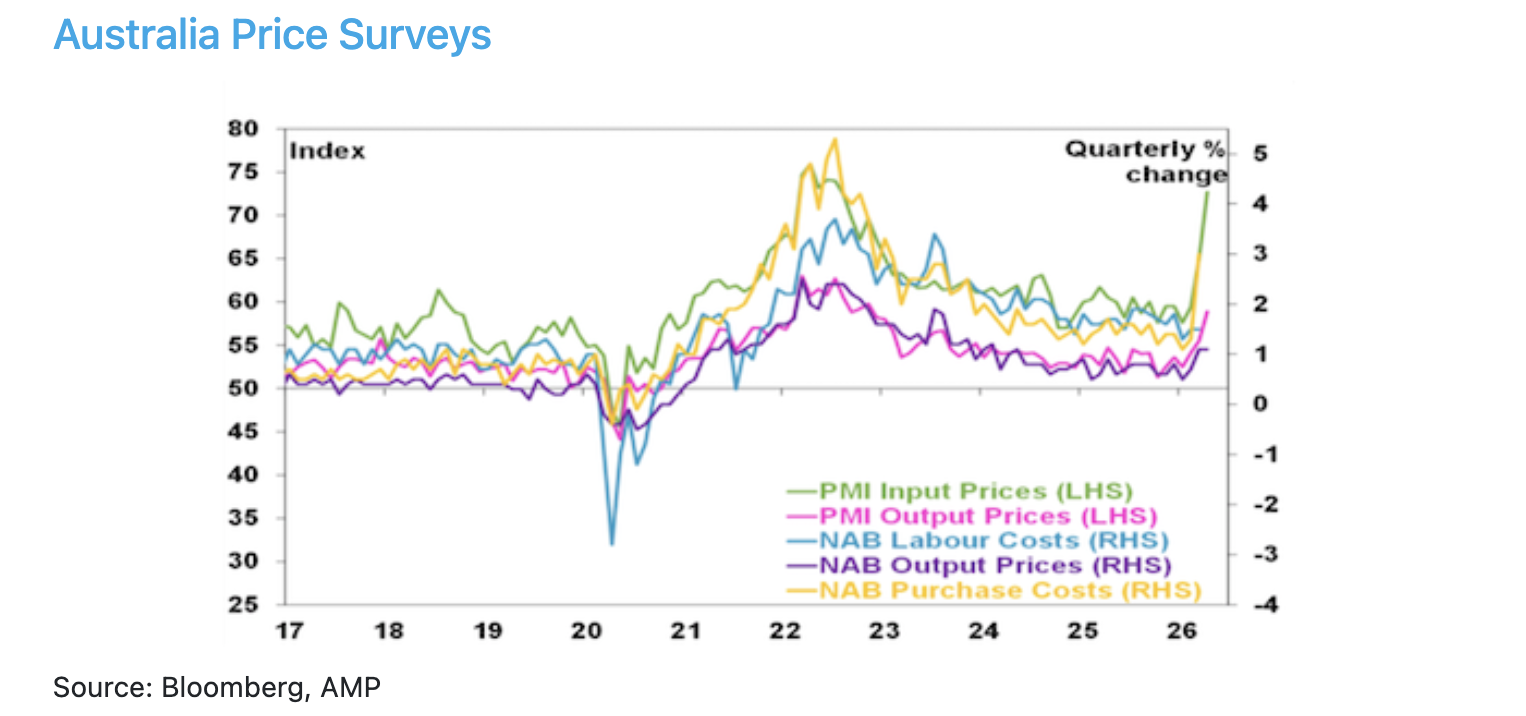
The economy came under renewed pressure in November as inflation accelerated.

Higher inflation and a stronger labour market strengthened the view that the Reserve Bank of Australia’s easing cycle may have ended and fuelled speculation of a rate hike.

The ASX200 finished the month down 3%, marking its biggest drop in eight months. Major banks led the losses due to valuation concerns and fading hopes of near-term policy easing.

Global shares rose over the last week of November as the US shares rebounded on the back of increased confidence that the Fed will cut rates next month.

The positive global lead also pulled up Australian shares although they were constrained by a further rise in local inflation leading to talk that the next move by the RBA may be a rate hike later next year.

Click here to view our update.

Please get in touch on 03 9723 0522 if you’d like assistance with your personal financial situation.

Suite 2, 1 Railway Crescent
Croydon, Victoria 3136

Email: integrityone@iplan.com.au

Telephone : 03 9723 0522

Integrity One Facebook

This information is of a general nature and does not take into consideration anyone’s individual circumstances or objectives. Financial Planning activities only are provided by Integrity One Wealth Advisers Pty Ltd (ABN 35 994 727 125) as a Corporate Authorised Representative (1316489) of Integrity Financial Planners Pty Ltd (AFSL 225051). Integrity One Wealth Advisers Pty Ltd and Integrity One Accounting and Business Advisory Services Pty Ltd are not liable for any financial loss resulting from decisions made based on this information. Please consult your adviser, finance specialist, broker, and/or accountant before making decisions using this information.
Filed Under: Blogs, News Tagged With: FP

  • « Previous Page
  • 1
  • 2
  • 3
  • 4
  • 5
  • Next Page »
  • Home
  • What’s News
  • About Us
  • Financial Services Guide
  • Contact Us

Services

  • Financial Planning Services
  • Aged Care
  • Finance & Mortgage
  • Centrelink
  • Accounting and Taxation
  • Business Advisory Services
  • Gen X,Y & Z

Recent News items

Market movements & economic review – May 2026

Nine key longer term consequences of the US/Israeli war with Iran

EOFY prep that pays off for property investors

All News items

Contact Us

Suite 2, 1 Railway Crescent
Croydon, Victoria 3136

Phone: (03) 9723 0522

Find us on Facebook

  • Home
  • Sitemap
  • Privacy
  • Complaints
  • Contact

All Rights Reserved 2016 Copyright Integrity one